
If you’re new to aquariums and looking to add some live plants to your setup, it can be overwhelming to know where to start.
Not all aquarium plants are created equal; some are much easier to care for than others.
This comprehensive guide will review the top 11 freshwater aquarium plants for beginners, including the best foreground, mid-ground, and background options.
We’ll also cover why you should use aquarium plants, the different types available, and how to choose the right plants for your tank based on lighting and maintenance requirements.
So whether you’re a beginner or just looking for new plant options for your aquarium, read on to discover the best freshwater aquarium plants for beginners.
Key Takeaways:
- Adding live plants to your aquarium can provide numerous benefits, including improving water quality, providing a natural habitat for fish, and enhancing the overall aesthetic.
- Not all aquarium plants are beginner-friendly, so choosing the right plants is essential based on your tank’s lighting and maintenance requirements.
- The top 11 freshwater aquarium plants for beginners include Java Moss, Lilaeopsis, Dwarf Baby Tears, Water Wisteria, Amazon Sword, African Water Fern, Java Fern, Anubias, Cryptocoryne Beckettii, Aponogeton Ulvaceus Bulb, and Dwarf Aquarium Lily.
Ready to learn more about each of these beginner-friendly plants and how to care for them?
Let’s dive in!
Top 11 Aquarium Plants for Beginners Reviewed
When selecting aquarium plants, it’s essential to choose options suitable for beginner aquarium enthusiasts.
However, the following 11 plants are perfect for those new to live plants, as they require little to no additional care and are easy to maintain.
The Best Foreground & Carpeting Plants for Beginners
Java Moss

- Loose portion bunch; enough moss to make a 5 by 5 inch or larger mat that covers 25 square inches
- Grows along driftwood, rocks, and other surfaces; grows along rear glass for a plant backdrop effect
- Does not need special or high intensity lighting; can be kept in any freshwater aquarium
- Provides biofilm, hiding places, and security for the young when you place it in a breeding tank
- Comes with a 100 percent Live Arrival
- Age Range Description: All Life Sta
Java Moss is one of the most popular and easy-to-care-for aquarium plants.
Its dense, bushy growth pattern makes it an excellent option for a foreground or carpeting plant.
This plant is easy to maintain, requiring only low to moderate lighting and no CO2 injection.
Additionally, Java Moss can attach itself to any surface, making it a versatile option for aquariums of all shapes and sizes.
Quick Care Table
| Lighting Requirements | CO2 Requirements | Growth Rate |
| Low to moderate | None | Slow |
Best Use Option
- Foreground plant
- Carpeting plant
- Hiding place for fry
Lilaeopsis

- Lilaeopsis brasiliensis from South America can grow very compact, but a lawn effect (4-7 cm tall) is only achieved at high light intensity.
- When planting in the aquarium small clumps (approx. 1/8 pot) should be placed a few centimetres apart to help the plants grow together more quickly.
- Place in an open position without shading from other plants to ensure good light. Lilaeopsis brasiliensis can be used in garden ponds, and also tolerates low salt concentrations in brackish aquariu
Lilaeopsis is another excellent option for a foreground plant. This plant grows low, forming a thick carpet of tiny green leaves. In addition, Lilaeopsis is a slow grower, so it doesn’t require frequent pruning, making it an excellent choice for those who don’t want to spend much time maintaining their plants.
Quick Care Table
| Lighting Requirements | CO2 Requirements | Growth Rate |
| Moderate to high | None | Slow |
Best Use Option
- Foreground plant
- Carpeting plant
- Bottom covering
Dwarf Baby Tears

- You will get one 5 x 3 pre-grown plant mats ready to add to your aquarium
- Create a dense aquarium foreground with these ready to place mats
- Perfect for aquariums of any size but they must have a light for aquariums
- Please note that during times of extreme weather, live plants will suffer due to temperatures. During winter, do not order live plants when temperatures are expected to go below 20F at the lowest point during the day. During summer, avoid ordering plants when temperatures are above 10
Dwarf Baby Tears, also known as Hemianthus Callitrichoides, is a popular choice for a foreground plant due to its tiny, round leaves.
It’s a little more challenging to care for than Java Moss or Lilaeopsis, but still relatively easy for beginners.
This plant requires moderate to high lighting and a CO2 injection system to thrive.
Quick Care Table
| Lighting Requirements | CO2 Requirements | Growth Rate |
| Moderate to high | CO2 injection | Slow |
Best Use Option
- Foreground plant
- Carpeting plant
Stay tuned for the next section to cover the best mid-ground and background plants for beginners.
The Best Plants For Mid-Ground Or The Background Of Your Tank
Water Wisteria

- ORDER MIGHT BE CANCELLED IF THE TEMPERATURE IS ABOVE 85 OR BELOW 35 IN THE NEXT 7 DAYS
- Each order contains 1 bunch (3 stems) of Hygrophila difformis, 3-5 inche in height
- A special light for aquatic plants is required to grow water spangles indoor, Stem plant, doesnt come with roots, once planted in substrate, roots will develop
- Substrate required, Low demanding, medium light, co2 supplementation is not required, Mid-ground to Background plant
- 100% Alive On Arrival (AOA) Guarantee, if there is any problem, just send us a message to receive a replacem
Water Wisteria is a popular and low-maintenance option for the mid-ground or background of your aquarium.
Its long, slender leaves add a beautiful, flowing texture to your tank.
However, water Wisteria grows relatively fast, so it’s important to trim it regularly to prevent it from overtaking your tank.
Quick Care Table
| Lighting Requirements | CO2 Requirements | Growth Rate |
| Low to High | None | Fast |
Best Use Option
- Mid-ground plant
- Background plant
- Hiding place for fish
Amazon Sword

- Echinodorus bleheri from South America is undemanding and beautiful, and becomes 20-50 cm tall.
- A nutritious bottom promotes growth, but the plant needs pruning to prevent it depriving plants underneath of light.
- Echinodorus bleheri does well even in poorly illuminated aquariums, as it grows towards the light. It is a hardy and easy solitary plant for both beginners and the more experienced with quite large aquariums. It has been sold under the name Paniculat
Amazon Sword is a popular option for the mid-ground or background of your aquarium due to its large, lush leaves that resemble a sword.
This plant can grow quite tall, so it’s essential to ensure you have enough space in your tank before adding it.
Amazon Sword is easy to care for, requiring only moderate lighting and no CO2 injection.
Quick Care Table
| Lighting Requirements | CO2 Requirements | Growth Rate |
| Moderate | None | Moderate to fast |
Best Use Option
- Mid-ground plant
- Background plant
- Hiding place for fish
African Water Fern

- LIVE AQUARIUM PLANT : Bolbitis Heudelotii , unique looking plant, making great contrast in your aquarium tank. Came from African.
- PERFECT FOR ANY AQUARIUM : Water Fern can be used for any aquarium tank. When planting do not cover rhizome.
- EASY TO MAINTAIN AND PROPAGATE : Slow growth rate, can be increased by supplying CO2.
- PROVIDES AMAZING ENVIRONMENT : Live aquatic plants will produce oxygen and absorb carbon dioxide to enhance water quality in your aquarium community. Adding live plants not only beneficial for the natural ecosystem but also giving shelter and security place for your aquarium pets.
- HIGH TECHNOLOGY : Our plants grown by using the latest technology and facility with digital controlled nursery to ensure that our plants are diseases pest snail and algae fr
African Water Fern is an easy-to-care-for plant suitable for the mid-ground or background of your aquarium.
Its large, flowing leaves add a unique texture to your tank, and it can grow quite tall if given enough space.
In addition, African Water Fern requires only low to moderate lighting and no CO2 injection.
Quick Care Table
| Lighting Requirements | CO2 Requirements | Growth Rate |
| Low to moderate | None | Slow to moderate |
Best Use Option
- Mid-ground plant
- Background plant
- Hiding place for fish
Java Fern
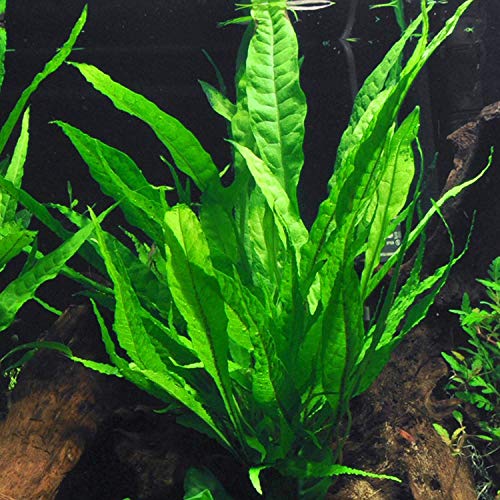
- WEATHER WARNING - Please note that during times of extreme weather, live plants will suffer due to temperatures. During winter, do not order live plants when temperatures are expected to go below 32F at the lowest point during the day. During summer, avoid ordering plants when temperatures are above 100F.
- You get Java Fern bare root of approximately 6-8 in height. Please note there are 3 plants together in the main picture
- This Java Fern s a great and easy way to attaching Java fern to driftwood, rocks, etc
- Provide natural resting and hiding places for your smaller fish and invertebrates
- Make your fish tank look natural and beautiful. Perfect for aquariums of any s
Java Fern is a popular and low-maintenance option for the mid-ground or background of your aquarium.
Its long, narrow leaves add a beautiful, flowing texture to your tank, and it can grow quite tall if given enough space.
In addition, Java Fern requires only low to moderate lighting and no CO2 injection.
Quick Care Table
| Lighting Requirements | CO2 Requirements | Growth Rate |
| Low to moderate | None | Slow to moderate |
Best Use Option
- Mid-ground plant
- Background plant
- Hiding place for fish
Anubias

- Anubias Nana is one of the most popular aquatic plants loved by both beginners and experts alike, and will instantly give your aquarium, paludarium, or terrarium a lush and natural appearance.
- Known for its smaller stems, rich green tone, and pointed leaves, this aquatic plant is great for filling up open space and can be placed in the midground or background of your tank.
- Ships 4-6 tall rooted in wool which should be removed prior to planting. Gently squeeze the pot, peel back the wool, rinse, and plant! Keep the rhizomes above your substrate or the plant can begin to rot.
- Will thrive attached directly onto hardscape such as driftwood and stones using thread or aquarium glue and will grow fine either immersed in a humid environment or fully submerged.
- Easy Care - Anubias have low light requirements, can benefit from regular fertilization, and do not require additional Co2 making them a great choice for beginners to live aquatic plan
Anubias is another low-maintenance option for the mid-ground or background of your aquarium.
This plant has large, sturdy leaves that can grow quite tall.
In addition, Anubias requires only low to moderate lighting and no CO2 injection.
Quick Care Table
| Lighting Requirements | CO2 Requirements | Growth Rate |
| Low to moderate | None | Slow |
Best Use Option
- Mid-ground plant
- Background plant
- Hiding place for fish
Cryptocoryne Beckettii

- CRYPT PETCHII : Live aquatic plant, Create stunning foreground in your tank, attachin with rock or driftwood with olive green. Forming low growing with bushy look. Contrasting in texture and color.
- SLOW GROWTH RATE : NOT much tirmming required. No special requirement. moferate light to keep them ideal growth pattern, with horizontal spread.
- TISSUE CULTURE : also known as vitro plants. With high quality technology facilities and lastest tissue culture laboratory, TC cup from Greenpro grown with sterile process with special gel to ensure to be free from algae, disease, pest and snail.
- BEST QUALITY : With our experience, every plants from Greenpro will be professionally inspected, packed and organized with suitable boxes for all weather conditions to make sure that will retain the freshness and healthiness to our customer hands.
- RINSE! CUT! PLANT! : RINSE them under water and wash out any gel. CUT, divide into small portions. PLANT, ready to grow onto substrate, driftwood, rock e
Cryptocoryne Beckettii is a popular option for the mid-ground or background of your aquarium due to its large, flowing leaves.
This plant is easy to care for, requiring only low to moderate lighting and no CO2 injection.
However, Cryptocoryne Beckettii can grow quite tall, so it’s essential to ensure enough space in your tank before adding it.
Quick Care Table
| Lighting Requirements | CO2 Requirements | Growth Rate |
| Low to moderate | None | Slow |
Aponogeton Ulvaceus Bulb

- LIVE AQUARIUM PLANTS : We sourced very exotic and rare specie. Easy to put into your aquarium tank no hassle to tie up the plant.
- SOURCE OF FOOD : Natural aquarium plants can provide nutrients and improve digestion for fish.
- CREATE NATURAL LOOKING : Adding Echinodorus Bleheri can enhance environment of your tank. Your aquarium pets need a hiding place and feel safe at home
- BEST QUALITY | With our experience, every plants from Greenpro will be professionally inspected, packed and organized with suitable boxes for all weather conditions to make sure that will retain the freshness and healthiness to our customer hands.
- HIGH TECHNOLOGY : Our plants grown by using the latest technology and facility with digital controlled nursery to ensure that out plants are diseases pest snail and algae fr
Aponogeton Ulvaceus Bulb is a popular option for the mid-ground or background of your aquarium due to its large, flowing leaves that resemble seaweed.
This plant requires moderate to high lighting and CO2 injection to thrive.
Aponogeton Ulvaceus Bulb can grow quite tall, so it’s essential to ensure you have enough space in your tank before adding it.
Quick Care Table
| Lighting Requirements | CO2 Requirements | Growth Rate |
| Moderate to high | CO2 injection | Fast |
Best Use Option
- Mid-ground plant
- Background plant
- Hiding place for fish
Dwarf Aquarium Lily

- Live Aquarium Plants : Nymphaea rubra 1 bulb.
- Difficulty - Easy ready to grow! | Light - Medium | Growth - Fast.
- 3 DAYS LIVE GUARANTEED: In a very rare case our live plant dead on arrive or within 3 days. Please send us the photo within 3 days. Live Guaranteed will be voided after 3 days of delivery. We honor our guaranteed.
- Photo is not actual plant but is a sample of our stock. Safe for your aquarium pets.
- PLEASE NOTED: The reddish will be depending on the conditions. The leaves may not attached but will start growing after settleme
Dwarf Aquarium Lily is a popular and easy-to-care-for option for the mid-ground or background of your aquarium.
Its long, slender leaves add a unique texture to your tank.
Dwarf Aquarium Lily requires only low to moderate lighting and no CO2 injection.
Quick Care Table
| Lighting Requirements | CO2 Requirements | Growth Rate |
| Low to moderate | None | Slow |
Best Use Option
- Mid-ground plant
- Background plant
- Hiding place for fish
Key Take-Aways:
- The best mid-ground and background plants for beginners include Water Wisteria, Amazon Sword, African Water Fern, Java Fern, Anubias, Cryptocoryne Beckettii, Aponogeton Ulvaceus Bulb, and Dwarf Aquarium Lily.
- These plants require moderate to high lighting and CO2 injection to thrive.
- Adding mid-ground and background plants can add depth and texture to your aquarium while providing additional hiding places for your fish.
Now that we’ve covered the best aquarium plants for beginners, let’s move on to the next section, where we will discuss why you should use aquarium plants in your tank.
Why You Should Use Aquarium Plants
Aquarium plants are more than just a pretty addition to your tank.
They can provide numerous benefits for your fish and overall tank health.
Here are some of the top reasons you should use aquarium plants in your tank:
Improved Water Quality
Aquarium plants absorb harmful chemicals and toxins, improving the overall water quality.
Ensure to reduce of ammonia and nitrate levels in the water, which can harm fish at high levels.
Natural Habitat for Fish
Adding live plants to your aquarium can provide a natural habitat for your fish.
Many fish prefer hiding places and exploring areas; plants can provide that.
Additionally, some fish species will lay their eggs on plant leaves, making it an essential breeding ground.
Aesthetically Pleasing
Aquarium plants add a natural and aesthetically pleasing element to your tank.
They can create a more natural-looking environment for your fish and provide texture and depth to your tank.
Oxygen Production
Like all plants, aquarium plants produce oxygen through photosynthesis.
This additional oxygen can benefit your fish and help maintain the overall health of your tank.
Algae Control
Live plants can help to control algae growth in your tank.
They compete with algae for nutrients in the water, which can help reduce algae growth in your tank.
Key Takeaways:
- Aquarium plants can provide numerous benefits, including improved water quality, a natural habitat for fish, aesthetics, oxygen production, and algae control.
- Adding live plants to your aquarium can provide a more natural environment for your fish while improving their overall health.
- The addition of aquarium plants can also enhance the overall aesthetics of your tank.
Now that you know why you should use aquarium plants, let’s move on to the next section, where we will discuss the different types available.
The Different Types of Aquarium Plants
Aquarium plants come in many different shapes, sizes, and colors.
Understanding the different types of plants available can help you choose the best options for your tank.
Here are the main categories of aquarium plants:
Stem Plants
Stem plants are tall, narrow plants that grow straight from the substrate.
They typically have a single stem with leaves branching off from it.
Stem plants are fast-growing and can quickly fill in empty spaces in your tank.
However, they require moderate to high lighting and CO2 injection to thrive.
Examples of stem plants include:
- Rotala
- Ludwigia
- Bacopa
- Hygrophila
Rosette Plants
Rosette plants grow in a circular pattern, with leaves radiating from a central point.
They typically have a single root system and grow slowly.
Rosette plants require moderate to high lighting and CO2 injection to thrive.
Examples of rosette plants include:
- Amazon Sword
- Cryptocoryne
- Anubias
- Java Fern
Carpeting Plants
Carpeting plants are low-growing plants that cover your tank substrate, resembling a carpet.
They require moderate to high lighting and CO2 injection to thrive.
Examples of carpeting plants include:
- Dwarf Baby Tears
- Java Moss
- Hairgrass
- Monte Carlo
Floating Plants
Floating plants are plants that float on the surface of your tank.
They don’t require substrate or planting and can help control algae growth in your tank.
In addition, floating plants require low to moderate lighting and no CO2 injection.
Examples of floating plants include:
- Duckweed
- Water Lettuce
- Salvinia
- Frogbit
Key Take-Aways:
- Aquarium plants come in many different shapes, sizes, and colors.
- The main categories of aquarium plants include stem, rosette, carpeting, and floating plants.
- In addition, different types of aquarium plants have additional requirements for lighting and CO2 injection.
- Understanding the different kinds of aquarium plants can help you choose the best options for your tank.
Now that you know the different types of aquarium plants, let’s move on to the next section, where we will discuss lighting and aquarium plants.
Lighting & Aquarium Plants
Lighting is an essential element for aquarium plants to grow and thrive.
Different types of plants require different lighting levels, so choosing the right kind of lighting for your specific plants is essential.
Here’s what you need to know about lighting and aquarium plants:
Types of Lighting
Three main lighting types are used in aquariums: fluorescent, LED, and metal halide.
Each type of lighting has advantages and disadvantages, and the kind of lighting you choose will depend on your specific needs.
Fluorescent lighting is a popular choice for aquariums because it’s relatively inexpensive and provides a good amount of light.
However, LED lighting is becoming more popular due to its energy efficiency and long lifespan.
Metal halide lighting is the most intense and provides the most light, but it’s also the most expensive and can generate a lot of heat.
Lighting Requirements for Different Types of Plants
Different types of plants require different levels of lighting to grow and thrive.
Generally, stem plants and carpeting plants require higher illumination levels, while rosette plants and floating plants require lower lighting.
If you’re unsure of the lighting requirements for your specific plants, research their particular needs or consult an expert.
Light Cycles
In addition to the lighting type and level, the light cycle length is essential for aquarium plants.
Most plants require between 8 and 12 hours of weak daily to thrive. Therefore, a consistent light cycle is necessary to ensure optimal plant growth.
Adding CO2
In addition to lighting, many aquarium plants require CO2 injection to grow and thrive.
Adding CO2 to your tank can help your plants grow faster and healthier.
If you have high-light plants or want to encourage faster growth, consider adding CO2 to your tank.
Key Take-Aways:
- Lighting is an essential element for aquarium plants to grow and thrive.
- Different types of plants require different lighting levels and may require different types of lighting.
- Maintaining a consistent light cycle is essential for optimal plant growth.
- Adding CO2 to your tank can help your plants grow faster and healthier.
Now that you know about lighting and aquarium plants, let’s move on to the next section, discussing the best plants to use in low-light tanks.
Best Types of Aquarium Plants to Use In Low-Light Tanks
Low-light tanks can be an excellent option for beginners or those who do not want to invest in expensive lighting equipment.
However, choosing the suitable types of plants for a low-light tank is essential to ensure they can thrive.
Here are the best types of aquarium plants to use in low-light tanks:
Java Moss
Java Moss is a versatile and easy-to-care-for plant that can thrive in low-light tanks.
It can be attached to rocks or driftwood and left to grow, creating a natural and textured look in your tank.
Java Moss can also be used as a carpeting plant and is an excellent option for providing hiding places for your fish.
Anubias
Anubias is a slow-growing plant that can thrive in low to moderate lighting.
It’s an excellent option for adding texture and depth to your tank, and it can be attached to rocks or driftwood.
Anubias is also a perfect option for beginners because of its low-maintenance requirements.
Java Fern
Java Fern is a low-maintenance plant that can grow in low to moderate lighting.
It’s an excellent option for adding height and texture to your tank, and it can be attached to rocks or driftwood.
Java Fern is also a perfect option for providing hiding places for your fish.
Cryptocoryne
Cryptocoryne is a slow-growing plant that can thrive in low to moderate lighting.
It’s an excellent option for adding color to your tank and can be planted directly into the substrate.
Cryptocoryne is also a perfect option for providing hiding places for your fish.
Key Take-Aways:
- Low-light tanks can be an excellent option for beginners or those who do not want to invest in expensive lighting equipment.
- Java Moss, Anubias, Java Fern, and Cryptocoryne are the best types of aquarium plants to use in low-light tanks.
- These plants are easy to care for and can add texture, depth, and color to your tank.
Now that you know the best types of aquarium plants to use in low-light tanks, let’s move on to the next section, where we will discuss the best aquarium plants to use in high-light tanks.
Best Types of Aquarium Plants to Use In High-Light Tanks
High-light tanks require more intense lighting than low-light tanks but allow a wider variety of plants to thrive.
Here are the best types of aquarium plants to use in high-light tanks:
Ludwigia
Ludwigia is a fast-growing stem plant that requires high lighting and CO2 injection to thrive. It has bright red leaves that can add color to your tank and can be planted directly into the substrate.
Ludwigia is also an excellent option for providing hiding places for your fish.
Rotala
Rotala is a stem plant that requires high lighting and CO2 injection to thrive.
It has delicate leaves that can add a unique texture to your tank and can be planted directly into the substrate.
Rotala is also an excellent option for providing hiding places for your fish.
Dwarf Hairgrass
Dwarf Hairgrass is a low-growing carpeting plant that requires high lighting to thrive.
It can add a natural and textured look to your tank and be planted directly into the substrate.
Dwarf Hairgrass is also an excellent option for providing hiding places for your fish.
Monte Carlo
Monte Carlo is a low-growing carpeting plant that requires high lighting and CO2 injection to thrive.
It has small and delicate leaves that can add a unique texture to your tank and can be planted directly into the substrate.
Monte Carlo is also an excellent option for providing hiding places for your fish.
Key Take-Aways:
- High-light tanks require more intense lighting than low-light tanks but also allow a wider variety of plants to thrive.
- Ludwigia, Rotala, Dwarf Hairgrass, and Monte Carlo are the best aquarium plants in high-light tanks.
- These plants can add color, texture, and depth to your tank and provide hiding places for your fish.
Now that you know the best types of aquarium plants to use in high-light tanks, let’s move on to the summary section, where we will recap the key takeaways from this comprehensive guide.
Summary
This comprehensive guide discussed the best freshwater aquarium plants for beginners.
We covered the top 11 aquarium plants for beginners, including the best foreground and carpeting plants and the best plants for the mid-ground or background of your tank.
We also discussed why you should use aquarium plants, the different types of aquarium plants, and the lighting requirements for aquarium plants.
We recommended using Java Moss, Anubias, Java Fern, and Cryptocoryne for low-light tanks.
For high-light tanks, we recommended using Ludwigia, Rotala, Dwarf Hairgrass, and Monte Carlo.
By choosing the suitable types of plants for your specific tank, you can create a natural and aesthetically pleasing environment for your fish while improving their overall health.
Key Take-Aways:
- Choose the suitable types of plants for your specific tank to create a natural and aesthetically pleasing environment for your fish.
- Different types of plants have different lighting and CO2 requirements.
- Aquarium plants can provide numerous benefits, including improved water quality, a natural habitat for fish, aesthetics, oxygen production, and algae control.
- Use this comprehensive guide as a starting point for choosing the best freshwater aquarium plants for beginners.
We hope you found this guide helpful! If you have any questions or comments, feel free to contact us.

- FILTERLESS: THE ETHICAL REALITY - August 28, 2025
- Complete Neon Tetra Care Guide for Aquarium Enthusiasts - March 15, 2024
- Will Neon Tetras breed in a community tank? - March 15, 2024