
If you’re looking for a natural and aesthetically pleasing addition to your aquarium, driftwood is a great option.
Not only does it provide a natural look, but it can also benefit your aquatic plants and fish.
However, preparing the driftwood properly is essential to ensure it’s safe for your aquarium inhabitants.
In this comprehensive guide, we’ll cover everything you need to know about preparing driftwood for your aquarium, including selecting the right piece, cleaning and curing it, and its pros and cons.
By the end of this guide, you can confidently add driftwood to your aquarium and create a beautiful and healthy environment for your aquatic pets.
Key Takeaways:
- Driftwood is a natural and aesthetically pleasing addition to your aquarium.
- Proper preparation of driftwood is crucial for the safety of your aquatic pets.
- This guide covers everything you need to know about preparing driftwood for your aquarium.
Ready to dive into the world of driftwood in aquariums?
Keep reading to learn more!
What Is Driftwood, And Where Does It Come From?

Driftwood is any wood washed up and deposited on a shoreline by water.
This can include logs, branches, or roots.
Driftwood can come from various sources, including rivers, lakes, and oceans.
The type of wood and its origins can impact the aquarium environment it best suits.
For example, hardwoods like oak or maple release tannins when placed in water, turning the water into a tea-like color.
This can be desirable for certain fish or aquatic plants but may not be ideal for others.
Softwoods like pine or cedar can also be used, but they tend to decay more quickly and can release harmful chemicals into the water.
Key Takeaways:
- Driftwood is any piece of wood deposited on a shoreline by water.
- Driftwood can come from various sources and types of wood, which can impact its suitability for specific aquarium environments.
- Hardwoods tend to release tannins, while softwoods decay more quickly and can release harmful chemicals.
| Driftwood Type | Effects on Water |
| Oak | Releases tannins, turns water brownish |
| Maple | Releases tannins, turns water brownish |
| Cedar | Decays quickly release toxins |
| Pine | Decays quickly release toxins |
| Manzanita | Minimal impact on water, safe for most aquatic life |
| Mopani | Releases tannins, which may lower pH |
Note: This table is not exhaustive, and the effects of different types of driftwood may vary depending on factors such as the size of the piece, how long it has been cured, and the water chemistry of your aquarium.
How Do I Know Driftwood Is Safe To Use?

Before adding driftwood to your aquarium, ensuring it’s safe for your aquatic pets is essential.
Driftwood can contain harmful bacteria, parasites, or chemicals that can harm your fish or plants.
Here are some ways to ensure your driftwood is safe to use:
Buy From A Local Fish Store
One way to ensure the driftwood you’re using is safe is to buy it from a local fish store.
These stores typically sell driftwood sourced and explicitly prepared for aquarium use.
They should also be able to guide the types of safe wood and any precautions you should take.
Cleaning
If you’re using driftwood you’ve collected yourself, cleaning it thoroughly before adding it to your aquarium is essential.
First, you scrub the wood with a stiff brush to remove debris or dirt.
Then, soak the wood in a bucket of water for several days, changing the water daily.
This will help to leach out any remaining tannins or toxins.
Curing
Curing driftwood involves soaking it in water until it sinks to the bottom.
This can take several weeks or even months, depending on the size of the wood.
During the curing process, bacteria and other microorganisms will break down any remaining organic material, making the wood safer for aquarium use.
Boiling Water
Another way to prepare driftwood for aquarium use is to boil it in water for several hours.
This can help to kill any harmful bacteria or parasites and can also speed up the leaching process.
However, boiling can also cause the wood to break down more quickly, so it’s essential to monitor the wood closely and remove it from the water once it’s soft and pliable.
Key Takeaways:
- Ensure driftwood is safe for aquarium use by buying from a local fish store or cleaning and curing it yourself.
- Cleaning involves scrubbing and soaking the wood in water for several days.
- Curing involves soaking the wood in water until it sinks to the bottom and bacteria break down organic material.
- Boiling can kill harmful bacteria and parasites and cause the wood to break down more quickly.
Preparing Your Driftwood For Use In An Aquarium
Once you’ve ensured that your driftwood is safe in your aquarium, you must prepare it for use.
Here are the steps to follow:
- Rinse the driftwood thoroughly with clean water to remove any remaining debris.
- If you’re using hardwoods like oak or maple, you may want to soak the wood in a bucket of water for several days to leach out any remaining tannins. On the other hand, if you’re using softwoods like pine or cedar, you may want to skip this step to avoid further decay.
- If you want the driftwood to sink, weigh it down with rocks or place it in a water container and let it soak until it falls. You can also tie a fishing line around the wood and attach a weight to the bar to help it sink.
- Once the wood is submerged, monitor it closely to ensure it doesn’t begin to rot or decay. You may need to periodically remove the wood from the water and scrub it with a stiff brush to remove any debris or algae that may accumulate.
- After a few weeks, your driftwood should be ready for use in your aquarium. Simply place it in the tank and arrange it as desired.
Key Takeaways:
- Rinse the driftwood thoroughly and soak it in a bucket of water to leach out tannins, if desired.
- Weigh the wood or tie a fishing line around it to help it sink.
- Monitor the wood closely to ensure it doesn’t begin to rot or decay.
- After a few weeks, your driftwood should be ready for use in your aquarium.
The Benefits Of Using Driftwood In An Aquarium
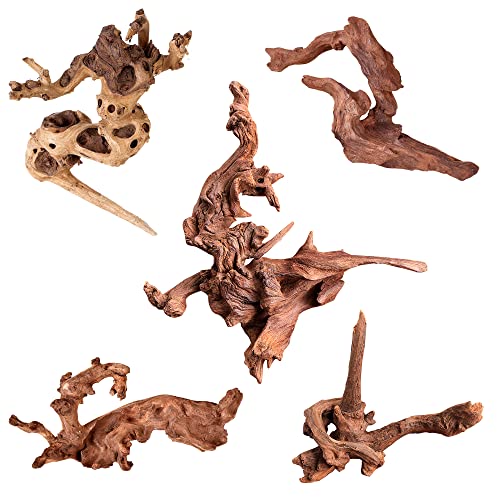
- 【NATURAL DRIFTWOOD】 --- Each piece of driftwood has a distinctive shape and looks different from various angles. Each piecec is unique.the pictures shown are only some of the driftwoods, what you get may be different from pictures show.
- 【SUITABLE FOR TANKS 5-10 GALLONS】 --- With a size of 4.5 inch-7.5 inch long or even larger, are carefully selected manually and suitable for tanks 5-10 gallons. They can instantly adds natural beauty to your aquarium.
- 【SUITABLE FOR AQUARIUMS OF VARIOUS STYLES】 --- It is suitable for aquariums decorated in simple styles. You can also use it to create moss trees in a fish tank. It can be used not only as aquarium decorations, but also as reptile decor.
- 【STURDY AND DURABLE】 --- High-quality drift wood, sturdy and durable, can be used for a long time under water or in drought environment. It is perfect decoration , adding natural beauty to your aquariums or terrariums.
- 【SATISFACTION ASSURED】 --- Buy with confidence! Every purchase is backed by our 30 Day Money Back Guarantee. If there are any damaged, contact us for a full refund or replaceme
Using driftwood in your aquarium can provide several benefits for your aquatic pets. Here are some of the pros and cons:
Pros
- Natural look: Driftwood can provide a simple and aesthetically pleasing addition to your aquarium.
- Hiding places: Driftwood can provide hiding places for fish and other aquatic pets, which can help reduce stress and improve their overall health.
- Nutrients: As driftwood breaks down, it releases nutrients that can benefit aquatic plants and encourage healthy growth.
- Water filtration: Driftwood can also help to filter your aquarium water by absorbing harmful chemicals and toxins.
Cons
- Tannins: Certain types of driftwood, mainly hardwoods like oak or maple, can release tannins into the water, turning the water brownish. While this can be desirable for some aquarium environments, it may not be ideal for others.
- Decay: Softwoods like pine or cedar can quickly decay and release harmful chemicals into the water. Monitoring the wood closely is vital to ensure it doesn’t begin to rot or decay.
Key Takeaways:
- Driftwood can provide several benefits for your aquarium, including a natural look, hiding places for fish, nutrients for aquatic plants, and water filtration.
- Certain types of driftwood can release tannins or decay more quickly, which can be a potential downside.
How To Select The Right Piece Of Driftwood For Your Tank
When selecting a piece of driftwood for your aquarium, there are a few things to consider:
Size and Shape
Ensure the driftwood you select is appropriately sized and shaped for your aquarium.
It shouldn’t take up too much space or overcrowd the tank, and it should be able to fit through the opening of your aquarium filter.
Type of Wood
Consider the type of wood you use and how it will impact your aquarium environment.
For example, hardwoods like oak or maple may release tannins, while softwoods like pine or cedar decay more quickly.
Cleanliness and Safety
Ensure the driftwood you select is clean and safe for your aquarium inhabitants.
For example, avoid using driftwood with sharp edges or splinters, which can harm fish or other aquatic pets.
Aesthetics
Finally, consider the aesthetics of the driftwood and how it will look in your aquarium. Select a piece that complements the overall look and feel of your tank.
Key Takeaways:
- When selecting driftwood for your aquarium, consider the size and shape, type of wood, cleanliness and safety, and aesthetics.
- Avoid using driftwood with sharp edges or splinters, and select a piece that complements the overall look of your tank.
Summary
- 【NATURAL DRIFTWOOD】 --- Each piece of driftwood has a distinctive shape and looks different from various angles. Each piecec is unique.the pictures shown are only some of the driftwoods, what you get may be different from pictures show.
- 【SUITABLE FOR TANKS 5-10 GALLONS】 --- With a size of 4.5 inch-7.5 inch long or even larger, are carefully selected manually and suitable for tanks 5-10 gallons. They can instantly adds natural beauty to your aquarium.
- 【SUITABLE FOR AQUARIUMS OF VARIOUS STYLES】 --- It is suitable for aquariums decorated in simple styles. You can also use it to create moss trees in a fish tank. It can be used not only as aquarium decorations, but also as reptile decor.
- 【STURDY AND DURABLE】 --- High-quality drift wood, sturdy and durable, can be used for a long time under water or in drought environment. It is perfect decoration , adding natural beauty to your aquariums or terrariums.
- 【SATISFACTION ASSURED】 --- Buy with confidence! Every purchase is backed by our 30 Day Money Back Guarantee. If there are any damaged, contact us for a full refund or replaceme
Driftwood can be a great addition to your aquarium, providing a natural look and several benefits for your aquatic pets.
However, it is essential to ensure the driftwood is safe and adequately prepared before adding it to your tank.
Remember to clean and cure the driftwood, monitor it closely for decay or rot, and consider the type of wood and its impact on your aquarium environment.
When selecting a piece of driftwood, consider the size and shape, type of wood, cleanliness and safety, and aesthetics.
Following these guidelines, you can confidently add driftwood to your aquarium and create a beautiful and healthy environment for your aquatic pets.
Key Takeaways:
- Proper preparation of driftwood is crucial for the safety of your aquarium inhabitants.
- When selecting driftwood, consider its size and shape, type of wood, cleanliness and safety, and aesthetics.
- Driftwood can provide several benefits for your aquarium, including a natural look, hiding places for fish, nutrients for aquatic plants, and water filtration.
FAQ
Here are some frequently asked questions about using driftwood in an aquarium:
Do I have to boil driftwood for the aquarium?
Boiling driftwood can be a helpful way to kill harmful bacteria or parasites and speed up the leaching process.
However, boiling can also cause the wood to break down more quickly.
If you’re using driftwood that has been adequately cleaned and cured, boiling may not be necessary.
Can I use driftwood from the beach in my aquarium?
Driftwood found on the beach can contain harmful bacteria, parasites, or chemicals that can harm your aquarium inhabitants.
It’s best to source driftwood from a local fish store or prepare it by following proper cleaning and curing procedures.
How long does it take to boil driftwood to make it sink?
The time required to boil driftwood to make it sink can vary depending on the size and type of wood.
Therefore, it’s essential to monitor the wood closely and remove it from the water once it’s soft and pliable, rather than leaving it in boiling water for a set amount of time.
Key Takeaways:
- Boiling driftwood can be helpful but may not be necessary if the wood has been adequately prepared.
- Driftwood found on the beach may contain harmful bacteria, parasites, or chemicals and should be avoided.
- The time required to boil driftwood to make it sink can vary, and monitoring the wood closely is essential.

- FILTERLESS: THE ETHICAL REALITY - August 28, 2025
- Complete Neon Tetra Care Guide for Aquarium Enthusiasts - March 15, 2024
- Will Neon Tetras breed in a community tank? - March 15, 2024